
State Legislative Election Watch- 2026 West Virginia Primary Preview
Covering all (and I mean all) of the state legislative primaries going down in West Virginia tonight!

STATE LEGISLATIVE ELECTION WATCH- May 11th, 2026
INTRO:
Hello everyone and welcome to Uncrewed’s State Legislative Election Watch! I’m Uncrewed/Chris and this is your one-stop-shop to everything you need to know about state legislative elections from around the country. We’ve got another two states holding primaries tonight in Nebraska and West Virginia. We covered Nebraska yesterday, so we’re onto West Virginia today! So, without further ado, let’s get to it!
BACKGROUND:
A small bit of context should be given before this year’s elections in West Virginia. Specifically the fact that the Republican primaries here are going to be closed primaries. What does that mean? Well, it means that only registered Republicans can vote, effectively shutting out registered independents from voting in the Republican primary. This will probably benefit the more conservative candidates in the race, but it remains to be seen.
SD-01 (Northwestern West Virginia, Trump+39) (R-Held) (GOP PRIMARY):
State Senator Laura Wakim Chapman is facing a challenger in the Republican primary for this deeply Republican district in the form of businessman Joe Eddy.
Chapman is a right-winger, touting her opposition to abortion, support for coal, and support for the 2nd Amendment. She’s backed by Governor Patrick Morrissey, State Senate President Randy Smith, the West Virginia Freedom Caucus, and a slew of conservative grassroots groups. Eddy is a more standard Republican, wanting to expand workforce development programs, expand school choice, and expand access to affordable healthcare. He’s backed by US Senator Shelley Moore Capito, several conservative-leaning business groups, and Education West Virginia, West Virginia’s largest teachers union. Thanks to the fine folks over at State Navigate (which I am technically a part of, maybe, I don’t know, it’s a long story), we do have a poll of this race! It’s from March, but it showed Chapman leading Eddy by a 40-15 margin, with nearly half of the electorate undecided. Chapman has a solid financial advantage over Eddy, but she seems to be saving her money for November, where she would face a competitive race with Democratic State Delegate Shawn Fluharty. That’s if she makes it through the primary though, which I think she will. She just seems more in tune with the Republican base than Eddy and has the power of incumbency on her side.
SD-02 (Tyler County to northern Monongalia County, Trump+42) (R-Held) (GOP PRIMARY):
With Republican incumbent Charles Clements retiring, two Republicans are running to replace him in this deeply Republican district: attorney Robert Dobkin and Marion County Development Authority member Toby Heaney.
Dobkin is running as a standard Republican, wanting to cut regulations in order to streamline job growth, support school choice, and expand all forms of energy producing efforts (coal, natural gas, solar, etc.). He’s backed by a few Republican-leaning business groups and several unions (most notably Education West Virginia). Heaney is a conservative, focusing on defending the 2nd Amendment, opposing abortion, and supporting tax cuts. He’s backed by Governor Morrissey, the other State Senator representing this district (Two Senators represent each State Senate district in West Virginia), Chris Rose, and several conservative grassroots groups. Dobkin has a good-sized financial advantage over Heaney, but the one poll taken of this race (from State Navigate a few weeks ago) shows Heaney leading Dobkin by a 36-33 margin, with over 30% still undecided. Ultimately, I think Heaney wins out, but a Dobkin win wouldn’t shock me as he’s run the better/more well-funded campaign. I just think Heaney’s got the support of the right people, more in tune with the district than Dobkin to put it bluntly.
SD-03 (Wood/Ritchie/Pleasants/Wirt Counties, Trump+48) (R-Held) (NORMAL GOP PRIMARY):
Republican incumbent Mike Azinger is being challenged by State Delegate Bob Fehrenbacher in the Republican primary for this deeply Republican district.
Azinger is a right-winger, touting his efforts to restrict gender-affirming care for minors, require E-Verify to “stop illegals from stealing our jobs,” and put “In God We Trust back in schools.” That last part is literal by the way, Azinger helped lead the charge to mandate all schools (public and private) put the motto in a common area so that everyone can see it. Virtue signalling at its finest? Absolutely. Red meat for the conservative base in a primary? Also yes. He’s mostly attacking Fehrenbacher for being a “RINO,” saying that he supports “gender identity” being taught in school and was a Democrat until recently. He’s endorsed by Governor Morrissey, several grassroots conservative groups and the West Virginia Coal Association. Speaking of Fehrenbacher, he’s running as a self-professed “common-sense conservative,” because he wants to give me Nebraska PTSD from yesterday. He’s mostly running on his voting record, touting his bills to expand workforce development, cut taxes, and improve public healthcare. Fehrenbacher also has a decent financial lead over Azinger, but in the one poll we have of this race (from State Navigate a few weeks ago), Azinger leads Fehrenbacher by a 52-29 margin. I think Azinger wins this one.
SD-03 (Wood/Ritchie/Pleasants/Wirt Counties, Trump+48) (R-Held) (SPECIAL GOP PRIMARY):
Republican incumbent Trenton Barnhart was appointed to this deeply Republican seat in January, but now he has to defend it in a special election. No Democrat filed to run here, so whoever wins the primary between Barnhart and former State Delegate Jason Harshbarger will serve out the remaining two years of this seat’s term.
Barnhart is a right-winger, wanting to increase the presence of faith in public life, continue to restrict abortion, and defend the 2nd Amendment. He’s backed by Governor Morrissey, the Fraternal Order of Police, and several conservative grassroots groups. Harshbarger is running on a vaguely conservative platform, calling himself an “outsider” who will stop “out-of-state interests” from interfering with West Virginia’s energy sector. Barnhart easily leads Harshbarger in the financial department and leads in the only poll taken of this race (by State Navigate a few weeks ago) by a 37-27 margin over Harshbarger, with almost 40% undecided. I think Barnhart wins this one relatively easily.
SD-04 (Mason County area, Trump+50) (R-Held) (GOP PRIMARY):
Republican incumbent Eric Tarr is facing two opponents in the Republican primary for this deeply Republican district: doctor Phillip Surface and businessman Travis Willard.
Tarr is a conservative, touting his efforts to cut government spending, restrict abortion, and defend the 2nd Amendment. He also explicitly says elective healthcare is not a right, so that’s a good thing to say when your opponent is a doctor. He’s backed by the West Virginia Chamber of Commerce, the NRA, and several Republican-aligned business groups. Surface is running as a moderate, wanting to attract more businesses to West Virginia (by cutting regulations), improve local infrastructure, and expand access to healthcare. He’s backed by Education West Virginia. Willard is also running as a moderate, wanting to attract more jobs to West Virginia, expand access to healthcare, and expand school funding. Surface leads the pack in fundraising, with Tarr lagging behind him, and Willard lagging behind both. I think Tarr wins this one, mostly thanks to incumbency and the moderate vote being split between Surface & Willard.
SD-05 (Huntington/northern Wayne County, Trump+25) (D-Held) (DEM PRIMARY):
Democratic incumbent Mike Woelfel is retiring from this solidly Republican district, meaning that the Democrats could be knocked down to just one State Senator if they lose here (and don’t flip any other districts). Three Democrats are running to make sure that doesn’t happen: former Huntington City Councilman DuRon Jackson, college professor Josh Keck, and teacher Paul David Ross.
Jackson is running as a standard Democrat, wanting to increase teacher pay, expand access to healthcare, and expand access to affordable housing. He also has no campaign presence online outside of his website and already terminated his campaign committee, so I don’t think he’s actively campaigning. Keck doesn’t have much of a campaign platform website online and one of his only Facebook posts about the campaign is an “AI Political Strategist” hyping him up. Finally, Ross is running on a vague platform of “empowering” West Virginia. He is backed by the IBEW though. None of these three candidates have raised much money, but I’m going to go with Ross to win just because he’s been on the ballot here (for State House) before. Either way, I’m finding it really hard to believe that any of these three can keep this district blue in November.
SD-06 (Mercer/Mingo/McDowell/southern Wayne Counties, Trump+62) (R-Held) (DEM/GOP PRIMARIES):
Republican incumbent Mark Maynard is facing three Republican opponents in this deeply Republican district: former State Delegate Eric Porterfield, businessman Jeff Disibbio, and conservative activist Edwin Ray Vanover.
Maynard is a conservative, touting his pro-life, pro-gun, and pro-Trump bonafides. It also appears he designed his campaign logo by telling an AI service to make a campaign logo with everything an eight year old high on pixie sticks would like:
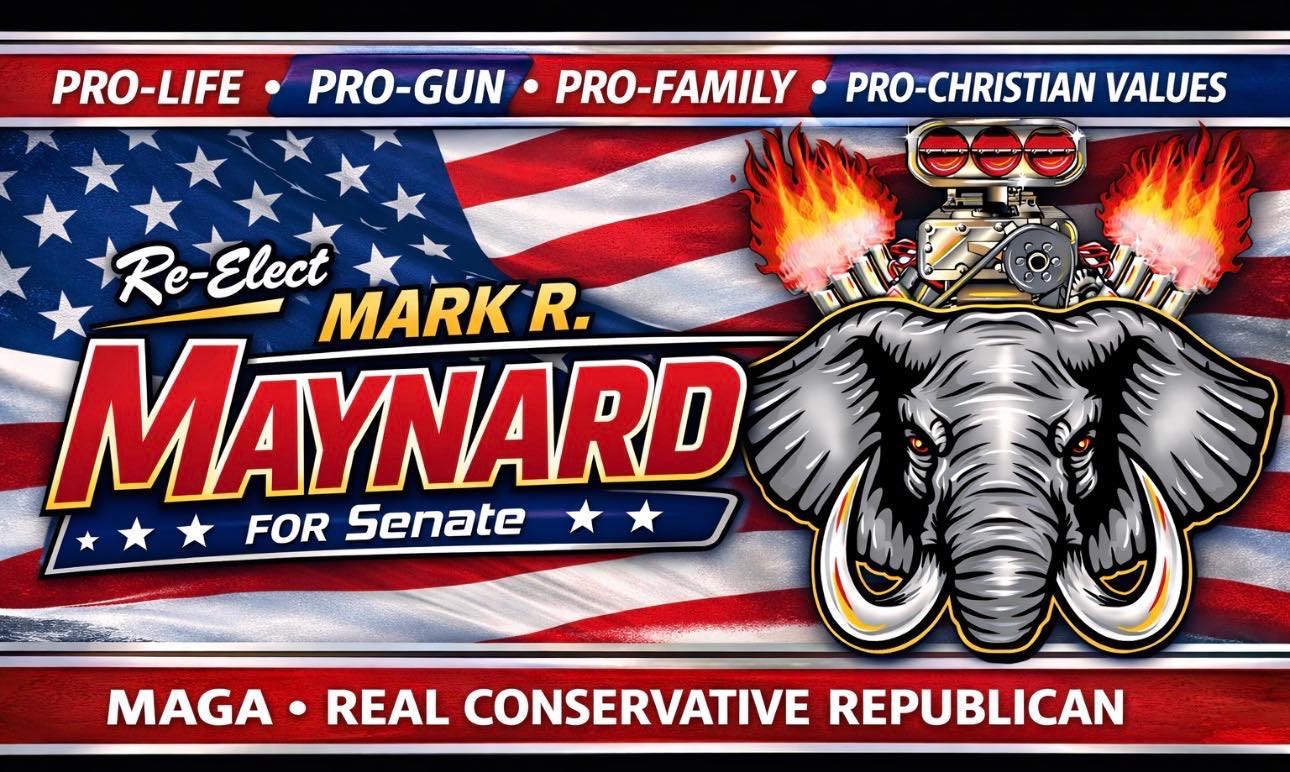
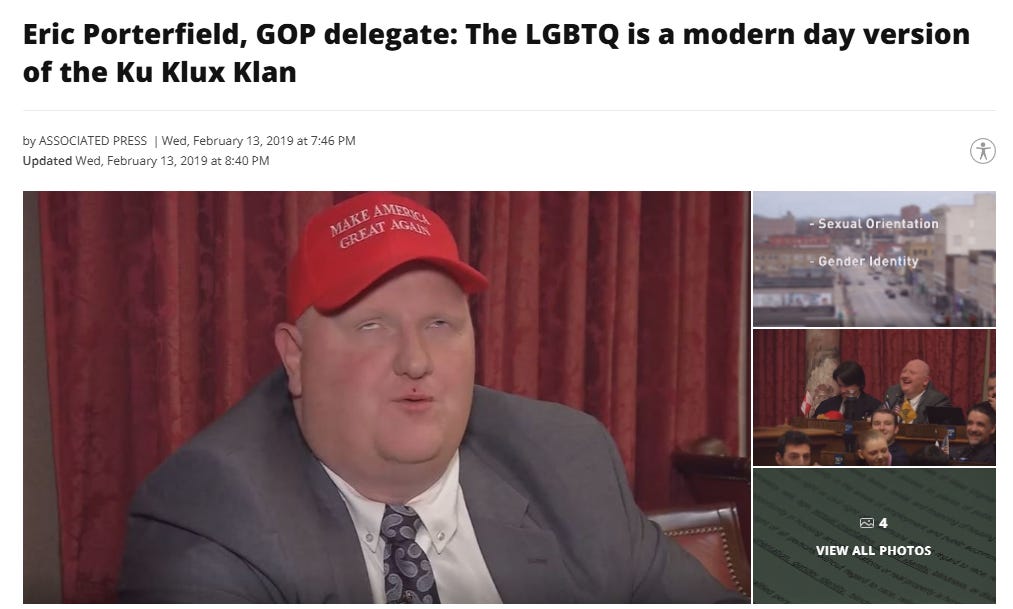
“Yeah, give me an elephant with tusks and an engine and FIRE!” Anyway, he’s backed by Governor Morrissey, the West Virginia Farm Bureau and several conservative groups. Porterfield is running as a right-winger, promising to cut taxes, support the 2nd Amendment, and defend “traditional marriage.” That last part is an anti-gay marriage plank, but he seems to have a problem with the whole LGBTQ+ community. In fact, he actually attracted national attention for saying some outrageous things about them during his time in the State House:
He ran for the other Senate seat here in 2024 and lost by 18 points. Disibbio is running as a moderate, wanting to cut red tape for businesses, support teachers, and improve local infrastructure. He’s backed by the West Virginia Chamber of Commerce and a few Republican-aligned business groups. Finally, Vanover doesn’t have much of a campaign platform outside of promising to “PUT PEOPLE FIRST.” Porterfield leads the pack in fundraising, with Maynard behind him and Disibbio lagging behind both. Vanover has raised a cool $20. I think Maynard wins this one.
On the Democratic side, two candidates are running: businessman Wyatt Lilly and community activist Joshua Hamby. Lilly doesn’t have much of a campaign presence online, but his main priority is to ensure clean drinking water for the district. He also supports unions and wants to increase the minimum wage. Hamby is running on a similar platform, wanting to expand access to clean drinking water and stop the Hope Scholarship (a state-run scholarship for both public & private schools). Lilly has a wide financial advantage over Hamby, so I think he wins, but Democratic primaries in deeply Republican districts (albeit a bit ancestrally Democratic) are notoriously hard to predict.
SD-07 (Logan/Boone/Lincoln/southern Kanawha Counties, Trump+56) (R-Held) (DEM PRIMARY):
Two Democrats are running for the Democratic nod to challenge Republican incumbent Zack Maynard in this deeply Republican district: Uber driver Cindy Brake and ghost candidate Michael Karr. Brake is mostly running on lowering the cost of living, while Karr doesn’t have any campaign presence online. Because of that, I think Brake wins this one, but again it’s hard to tell. Also, there is something funny about an Uber driver being named Brake, but that could just be my tired brain talking.
SD-08 (Clay County to central Charleston, Trump+27) (R-Held) (GOP PRIMARY):
Republican incumbent Kevan Bartlett was appointed to this deeply Republican district February 2025 and he’s running for a full term in office. He’ll be opposed in that effort by Kanawha County Commissioner Lance Wheeler and doctor Steven Eshenaur.
Bartlett is running as a conservative, touting his Christian faith, his efforts to bring more businesses to West Virginia, and support for “West Virginia values.” He’s backed by Governor Morrissey, the NRA and several conservative grassroots groups. Wheeler is also running as a conservative, promising to eliminate the state income tax, support school choice, and expand the local economy. He’s backed by the Koch-aligned Americans For Prosperity group. Eshenaur is running as a moderate, wanting to expand workforce development programs, improve local healthcare, and protect West Virginia’s natural resources. He’s backed by several local unions (most notably Education West Virginia and LiUNA!). Eshenaur has a wide financial advantage, with Wheeler and Bartlett lagging behind him. The one poll taken of this race (from State Navigate a few weeks ago) shows Wheeler leading, but only by two points. In fact, all three candidates are essentially tied! Wheeler leads 24-22-22 over Eshenaur and Bartlett, with a little over 30% undecided. In the end, I think Eshenaur actually wins this one. The conservative vote is split enough between Bartlett and Wheeler to lead to the moderate with union support to win. It’s very close though, I could definitely see any of the three candidates winning.
SD-09 (Raleigh/Wyoming/southern Fayette Counties, Trump+56) (R-Held) (GOP PRIMARY):
Republican incumbent Rollan Roberts is facing two opponents in his bid for a third term in the State Senate representing this deeply Republican district: State Delegate Adam Vance and doctor Michael Antolini.
Roberts is a conservative, touting his support for “family values,” his effort to cut utility costs, and his support for the 2nd Amendment. He’s backed by Governor Morrissey, Senate President Randy Smith and several state legislators. Vance is mostly running on his conservative voting record, but he also touts his opposition to lobbyists and threats from leadership. Antolini is running as a moderate, wanting to enact measures to better West Virginia in a bi-partisan way and attract more businesses to West Virginia. He’s backed by Education West Virginia. In the one poll of the race (from State Navigate a few days ago), Roberts leads Antolini by a 35-29 margin, with Vance taking 17% and a little under 20% still undecided. Roberts leads the three in fundraising, with Antolini close behind and Vance not raising much. I think Roberts’s incumbency should get him the win here.
SD-10 (Southeastern West Virginia, Trump+50) (R-Held) (GOP PRIMARY):
Republican incumbent Vincent Deeds is facing a challenge from pastor Jonathan Comer in the Republican primary for this deeply Republican district.
Deeds is running on his conservative voting record, touting his votes to cut taxes, slash regulations, and “protect girls’ sports.” He’s backed by the West Virginia Chamber of Commerce, West Virginia Farm Bureau, the NRA, and several other conservative-aligned groups. Comer is also running as a conservative, promising to “stand up” to liberals in Charleston (which liberals, the GOP outnumbers Democrats in the legislature by an 11-to-1 margin), cut taxes, and attract more businesses to West Virginia. He’s backed by Governor Morrissey. Comer has a decent-sized financial advantage over Deeds, but I think Deeds holds on and wins here thanks to his institutional support/incumbency. That Morrissey endorsement is very interesting though, so a Comer win shouldn’t be out of the question.
SD-11 (Eastern West Virginia, Trump+54) (R-Held) (GOP PRIMARY):
Republican incumbent Bill Hamilton is facing off against two opponents in the Republican primary for this deeply Republican district: former State Senator Robert Karnes and Buckhannon City Councilman Jack Reger.
Hamilton is calling himself a “common-sense conservative,” touting his efforts to improve tourism, improve local infrastructure, and expand rural broadband. He’s backed by US Senator Shelley Moore Capito, several State Senators, several local unions (most notably the AFL-CIO), and several Republican-aligned groups. Karnes is running as a right-winger, promising to protect Christians from being “silenced,” oppose abortion, and protect the 2nd Amendment. Reger is running somewhere in the middle of the two, focusing on expanding economic development, empowering local control, and protecting “religious liberty.” Hamilton easily leads both of his opponents in the financial department. Hamilton should win this one easily, as the district already threw Karnes out in 2024 by a near 30-point margin. Meanwhile, Reger really hasn’t run much of a campaign, so Hamilton should win this one.
SD-12 (Calhoun County to western Taylor County, Trump+47) (R-Held) (GOP PRIMARY):
Republican incumbent Ben Queen is facing a challenge from US Army veteran Joseph Earley in the Republican primary for this deeply Republican district. Queen is running as a standard Republican, touting his efforts to cut taxes, improve local infrastructure, and support small businesses. He’s backed by several Republican-aligned groups. Earley, who came in second in the 2024 WV-02 primary, is running to his right, promising to eliminate the state income tax, expand school choice, and cut “government waste.” He’s backed by several conservative State Senators and the Koch-aligned Americans For Prosperity group. Queen has easily outpaced Earley in fundraising and has incumbency on his side, so he should be the favorite. I’m not discounting Earley though, because his name recognition from 2024 and AFP support might be enough.
SD-14 (Northeastern West Virginia, Trump+59.5) (R-Held) (GOP PRIMARY):
Republican incumbent Jay Taylor is being challenged by two opponents in this deeply Republican district’s Republican primary: lobbyist/former State Delegate Marc Harman and former Democratic State Delegate Mike Manypenny.
Taylor is a right-winger, prominently touting his Christian faith on his website, touting his support for ICE, and promising to lower taxes. He’s backed by Senate President Randy Smith, the West Virginia Farm Bureau, and several conservative grassroots groups. Harman is a self-professed “common sense conservative,” wanting to attract more jobs to West Virginia, lower taxes, and expand access to affordable healthcare. Manypenny, despite his long career in West Virginia politics, has no campaign presence online and has raised no money. Harman is outpacing Taylor in fundraising, but I think Taylor wins thanks to incumbency and institutional support.
SD-15 (Hampshire/Morgan/northern Berkeley Counties, Trump+46) (R-Held) (GOP PRIMARY):
Republican incumbent Darren Thorne was appointed to this deeply Republican district back in December 2024 and now he’s facing two opponents in his bid for a full term: former State Delegate Ken Reed and teacher Robert Wolford.
Thorne brands himself as a “Christian conservative,” promising to protect local farmers, support “medical freedom,” and promote the “sanctity of life.” He’s backed by Governor Morrissey, Senate President Randy Smith, the Koch-aligned Americans for Prosperity group and several conservative grassroots groups. Reed is running as a standard Republican, touting his efforts to create jobs, lower taxes, and shrink the size of the government. He’s backed by the West Virginia Chamber of Commerce. Wolford is running to simply “give voters an alternative.” The race between Thorne and Reed has been nasty, with Thorne attacking Reed for supposedly being against an anti-trans bathroom bill, supposedly supporting government-run healthcare, and supposedly hating kids with down syndrome. Reed has fired back, claiming Thorne is using “out-of-state special interests” to win, pointing to his support from AFP. Reed leads Thorne in fundraising, but I think Thorne wins out here given that he’s probably more in tune with the district than Reed.
SD-16 (Jefferson/southern Berkeley Counties, Trump+24) (R-Held) (GOP PRIMARY):
Republican incumbent Jason Barrett is facing a challenge from businesswoman Chantelle Mack in this solidly Republican district. Barrett is running as a conservative, promising to increase “parental rights” in education, oppose abortion, and defend the 2nd Amendment. He’s endorsed by Senate President Randy Smith. Mack is running as a standard Republican, wanting to cut income taxes, support law enforcement, and increase teacher salaries. She’s backed by the West Virginia Farm Bureau. Barrett has a wide financial advantage over Mack, so he should be fine here.
SD-17 (Northern Kanawha County, Trump+21) (R-Held) (NORMAL GOP PRIMARY):
Republican incumbent Tom Takubo has been one of the biggest thorns in the side of Senate President Randy Smith over the last few years. A moderate, Takubo has butted heads often with the more conservative Smith and now Smith is looking to take him out of the Senate for good. He’s backing former State Delegate Chris Pritt in his mission to do so.
Takubo is running on a platform of expanding economic development, cutting taxes, and touting his vote to restrict abortion. He’s backed by US Senator/former Governor Jim Justice, the Fraternal Order of Police, several Republican-aligned groups, and Education West Virginia. Pritt is a conservative, touting his Christian faith on his campaign website, promising to cut taxes, and oppose abortion. He’s backed by Governor Morrissey, the West Virginia Freedom Caucus and several other conservative grassroots groups. He’s also been the unintended beneficiary of Smith airing ads attacking Takubo for voting against a bill that would have banned transgender athletes in high school/college sports. Takubo said he voted against it because of the college portion of the bill (preferring to leave that up to the NCAA), but it’s a cardinal sin in Republican politics nevertheless. In the two polls taken of this race (by State Navigate), Takubo led Pritt by a 40-39 margin and a 42-41 margin, so it’s very tight. Takubo does have a solid financial advantage over Pritt, but I think Pritt actually wins this one. Listen, the voting base this year is going to be more conservative than ever (thanks to closed primaries, see above) and Smith has made it his mission to get rid of Takubo, so I think Pritt wins out.
SD-17 (Northern Kanawha County, Trump+21) (R-Held) (SPECIAL DEM/GOP PRIMARIES):
Republican incumbent Anne Charnock was appointed to this solidly Republican seat in February of last year and now she’s running for a full term. She’ll have to get through businessman Michael Jarrouj in the primary if she wants that though.
Charnock is running as a standard Republican, wanting to expand economic development, support school choice, and protect West Virginia values (ergo supporting the 2nd Amendment and opposing abortion). She’s backed by Governor Morrissey. Jarrouj is running as a moderate, wanting to expand the local economy, cut taxes, and improve local infrastructure. He’s backed by the Fraternal Order of Police, Education West Virginia, and several Republican-aligned groups. In the two polls taken of the race (by State Navigate), Charnock led 42-26 and 54-28 over Jarrouj. Jarrouj does have a financial advantage over Charnock, but it’s not a huge one. Because of that, I think Charnock wins herself a full term and defeats Jarrouj.
On the Democratic side, two candidates are running: former South Charleston Mayor Richie Robb and nonprofit director Ted Boettner. Robb is running as a standard Democrat, focusing on protecting benefits for seniors, increasing funding for public schools, and lowering utility costs. He’s backed by Education West Virginia. Boettner is running on a similar platform, wanting to lower utility costs, increase funding for public schools, and increase taxes on the wealthy. He’s backed by several local unions, most notably the AFL-CIO. He has a huge financial advantage over Robb, but Robb should have name recognition from several failed statewide runs. I think Boettner still wins out though given his more impressive union support.
HD-02 (Weirton area, Trump+38.5) (R-Held) (GOP PRIMARY):
Republican incumbent Mark Zatezalo is facing a challenge from real estate agent Tony Viola in the Republican primary for this deeply Republican district. Zatezalo doesn’t have much of a campaign presence online outside, but in the one Facebook campaign video he has, he touts his efforts to expand energy production in the district. He’s backed by the West Virginia Chamber of Commerce. Viola is running as a moderate, wanting to expand economic development in the district, improve local infrastructure, and support law enforcement. He’s backed by the AFL-CIO and the West Virginia Coal Association. Viola does have a small financial advantage over Zatezalo, but that’s only thanks to self-funding from Viola. Zatezalo should be the favorite here.
HD-04 (Southern Ohio County, Trump+33) (R-Held) (GOP PRIMARY):
With Republican incumbent Bill Flanigan retiring after just one term, two Republicans are running to replace him in this deeply Republican district: businessman Derek Ennis and businessman Dolph Santorine.
Ennis is running as a moderate, wanting to improve local infrastructure, support local laborers, and improve government transparency. He’s backed by former Wheeling Mayor Andy McKenzie and former State Delegate Erikka Storch, who represented this area from 2010-2023. Santorine doesn’t have much of a campaign presence online, but he does support “adding value” to the district and increasing teacher pay. Ennis has a wide financial advantage over Santorine, so he should be the favorite to win here.
HD-05 (Wheeling, Trump+12) (D-Held) (GOP PRIMARY):
With Democratic incumbent Shawn Fluharty retiring in order to run for State Senate, the Republicans are eager to flip the last Democratic-held district in the northern panhandle. They’ll first have to choose their nominee for November between businesswoman Beth Hinebaugh and college student Riley Watkins. Technically that is correct, but Watkins withdrew from the race in March (after the withdrawal deadline, so he’s still on the ballot). That means Hinebaugh will be the Republican nominee in November.
HD-06 (Northern Marshall County, Trump+41.5) (R-Held) (GOP PRIMARY):
Republican incumbent Jeff Stephens is facing a challenge from Moundsville City Councilman Don DeWitt in the Republican primary for this deeply Republican district. Stephens is a conservative, touting his efforts to protect the 2nd Amendment, oppose abortion, and “keep coal alive.” He’s backed by the West Virginia Chamber of Commerce, the West Virginia Coal Association, and the NRA. DeWitt calls himself a “conservative fighter,” supporting tax cuts, regulation cuts, and increasing business investments. He’s backed by Governor Morrissey. Stephens has a solid financial advantage over DeWitt and I think that (alongside incumbency) should get him the win.
HD-08 (Doddridge County to western Wetzel County, Trump+67) (R-Held) (GOP PRIMARY):
Republican incumbent Bill Bell was appointed to this deeply Republican seat in July of last year and now he’s running for a full term. He’ll have to get through businessman Steven Smith in order to do so though. Bell has touted his perfect attendance record and has promised to vote for “common sense” proposals, even if it goes against his party. He’s backed by Education West Virginia. Smith is a conservative, touting his opposition to abortion, support for the 2nd Amendment, and support for “family values.” He’s backed by the AFL-CIO among other unions. I think Smith wins this one, given the fact that he has better finances than Bell and has stronger union support than Bell.
HD-09 (Ritchie/Pleasants/western Tyler Counties, Trump+67) (R-Held) (GOP PRIMARY):
Republican incumbent Betsy Kelly was appointed to this deeply Republican district in February (which was after the filing deadline, so she was already running here), but she’s facing five opponents in tonight’s primary: Friendly Mayor Steve Thomas, US Air Force veteran Mark Kimball, pastor Scott McGraw, businessman Dan Boley, and firefighter Kerry Murphy.
Kelly doesn’t have much of a campaign presence online, but she does support cutting taxes, expanding school choice, and raising teacher/law enforcement salaries. She’s backed by the United Mine Workers of America Thomas is a conservative, promising to protect the “sanctity of life,” support the 2nd Amendment, and increase funding for law enforcement. Kimball is also running as a conservative, promising to support “traditional American values,” oppose abortion, and defend the 2nd Amendment. McGraw is running as a christian nationalist, promising to bring God and Biblical values to the government, claiming that if the nation continues to “forsake God,” then God will forsake the nation. He also wants to overturn several Supreme Court rulings that strengthened the separation of church and state. Boley is mostly focused on expanding business development in the district. Finally, Murphy is running as an outsider, attacking Kelly for being a career politician and for voting against a budget that raised teacher salaries. He also wants to lower utility costs and food prices. He’s backed by a few local unions. Murphy leads the pack in fundraising, while Kelly, McGraw, and Thomas lag behind him and Kimball hasn’t raised much of anything. This is a pure toss-up folks, but I’m going to go with Murphy to win. You can make a decent argument for any of the candidates winning though, I really can’t see any of these people winning a majority of the vote.
HD-10 (Eastern Wood County, Trump+52) (R-Held) (GOP PRIMARY):
Republican incumbent Bill Anderson is facing a challenge from US Army veteran Justin Beanard in the Republican primary for this deeply Republican district. Anderson is a conservative, wanting to improve local infrastructure and eventually eliminate the state income tax. He’s backed by the West Virginia Chamber of Commerce. Beanard is running to focus on one issue, reforming the state Child Protective Service system. He said that he was inspired to run after seeing children separated from their families, saying that it contributes to the state’s drug epidemic. He’s only raised a whopping $21 for his campaign though, so Anderson should win this one easily.
HD-11 (Vienna/northern Parkersburg, Trump+30) (R-Held) (GOP PRIMARY):
With Republican incumbent Bob Fehrenbacher retiring in order to run for State Senate, two candidates are running to replace him in this deeply Republican district: former West Virginia Secretary of Homeland Security Jeff Sandy and Parkersburg City Council President Andrew Borkowski.
Sandy, who also used to be the Wood County Sheriff, is running as a moderate. He supports expanding economic development, increasing funding for law enforcement, and cracking down on fraud targeting seniors. He’s endorsed by the West Virginia Chamber of Commerce and the Communication Workers of America. Borkowski is running a bit to his right, wanting to cut taxes & regulations, modernize economic development, and increase funding for infrastructure. He’s backed by the Koch-aligned Americans For Prosperity group. Sandy leads Borkowski in the financial department by a 2-to-1 margin. I think Sandy wins this, given his long history in the area, but I could see Borkowski’s name recognition from the Parkersburg City Council and AFP ground game getting the win.
HD-12 (Central Parkersburg, Trump+27) (R-Held) (GOP PRIMARY):
Republican incumbent Vernon Criss has represented this solidly Republican district for almost a decade, but he’s facing the hardest primary challenge of his career so far in the form of conservative activist Charles Hartzog.
Criss calls himself a conservative, touting his votes to cut income taxes, bring jobs to West Virginia, and defend the 2nd Amendment. He’s backed by the West Virginia Chamber of Commerce. Hartzog, who is still a college student, is a conservative. He’s against abortion, for the 2nd Amendment, and supports coal. He’s backed by Governor Morrissey and the Koch-aligned Americans For Prosperity group. He’s attacked Criss for opposing bills to restrict abortion and require employers to use E-Verify to stop illegal immigrants from being hired. Criss has dominated Hartzog in the fundraising department, but Hartzog has been able to capture a solid amount of the right flank of the Republican Party. In fact, I think Hartzog actually wins here. A Criss win thanks to incumbency wouldn’t shock me, but I think Hartzog is more in-tune with the Republican primary base than Criss is here.
HD-13 (Southern Parkersburg area, Trump+51) (R-Held) (GOP PRIMARY):
Republican incumbent Scot Heckert is facing a primary challenge from businesswoman Melissa McCrady in this deeply Republican district. Heckert is a conservative, but he hasn’t updated his campaign website since at least the last election, which leads to some funny things like this:
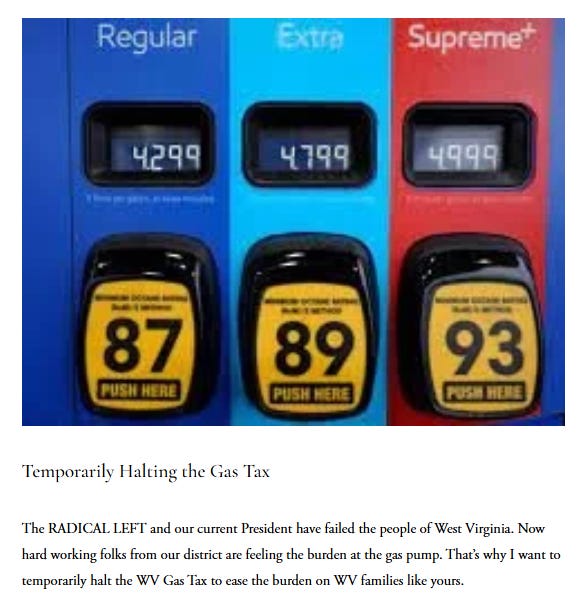
All of this could have been avoided if he just said Biden or actually updated his website, but no, we get this image that appears to blame Trump for gas prices being expensive. Anyway, McCrady is a conservative. She supports the 2nd Amendment, expanding “family values,” and preventing the government from infringing on “freedom.” She’s attacking Heckert for voting against religious exemptions for vaccines and for a few small pieces of gun control. She’s backed by SD-01 State Senator Laura Wakim Chapman. Heckert has a wide financial advantage over McCrady and should be fine here.
HD-14 (Western Wood/Wirt Counties, Trump+59) (R-Held) (DEM/GOP PRIMARIES):
Republican incumbent Dave Foggin is facing two opponents in the Republican primary for this deeply Republican district: Wirt County Republican Party Chairwoman Angie Adams and businessman Andy Daniel. Foggin doesn’t have much of a campaign presence online, but he’s been a solid conservative vote in the legislature. Adams is a right-winger, promising to use her Christian faith to defend “moral values” and support “medical freedom.” Daniel is also a conservative, touting his support for the 2nd Amendment and opposition to abortion. None of these three have raised much money, which makes me think that Foggin should be fine.
On the Democratic side, three candidates are running: US Marine Corps veteran Jonathan White, nonprofit director Crystal Butcher, and retired UPS driver Jim Marion. White doesn’t have a campaign presence online and hasn’t raised any money. Butcher is running on one issue, establishing a “community stakeholder credit,” which would lower property taxes and increase funding for schools by establishing a rebate for local school excess levies. Marion wants to increase teacher pay and repeal the state’s “right to work” law. None of these three have raised any money, so it’s a pure toss-up. I’m going with Marion, just because he’s been on the ballot here a lot, but that’s a shot in the dark.
HD-17 (Eastern Mason/northern Jackson Counties, Trump+53) (R-Held) (GOP PRIMARY):
Republican incumbent Jonathan Pinson is being challenged by former State Delegate Scott Cadle in the Republican primary for this deeply Republican district. Pinson is a conservative, touting his efforts to “preach God’s Holy Word” without “censorship” from the government, wanting to increase restrictions on abortion, and defend the 2nd Amendment. Cadle doesn’t have much of a campaign presence online, but he did attract local attention a few months ago for saving the life of a truck driver who was drowning in his truck after it plowed through a guard rail and crashed into a river. Badass? Yes. Something that wins him an election? Probably not, as Pinson has a huge financial advantage over him. Pinson should win this one easily.
HD-21 (Southern Putnam County, Trump+45) (R-Held) (GOP PRIMARY):
Republican incumbent Jared Cannon is retiring instead of running for a third term in this deeply Republican district. Two candidates are running to replace him: Hurricane City Councilman C.D. Caldwell and private investigator Michael Kidd.
Caldwell is running a vague campaign, mostly focused on his time on the Hurricane City Council and wanting to bring more jobs to the district. He’s backed by several local unions. Kidd is a conservative, wanting to lower taxes, oppose abortion, and defend the 2nd Amendment. He’s backed by several conservative grassroots groups. Caldwell leads Kidd when it comes to money and I think that (alongside his name recognition from the City Council) leads him to victory tonight.
HD-22 (Eastern Cabell County, Trump+51) (R-Held) (GOP PRIMARY):
Republican incumbent Daniel Linville is facing a primary challenge from railroad worker Aaron Holley in this deeply Republican district. Linville is running as a standard Republican, touting his efforts to cut taxes, wanting to expand rural broadband, and promising to protect “God-Given Constitutional Rights.” Holley is running as a moderate, wanting to bring more businesses to the district, improve community outreach, and expand workforce development programs. He’s backed by the West Virginia Chamber of Commerce. Holley lost to Linville by just 46 votes in 2024, but now Linville has a huge financial advantage over him and a more conservative primary base, so I think Linville wins this one.
HD-26 (Southern Huntington area, Trump+15) (R-Held) (GOP PRIMARY):
Republican incumbent Matthew Rohrbach is running for another term in this solidly Republican district, but first he has to get through community activist Andrew Lowry in the primary. Rohrbach is a moderate, wanting to expand workforce development programs, aggressively fight the opioid epidemic, and cut regulations for businesses. Lowry wants to let local municipalities make the final decision on data centers, expand access to clean drinking water, and cut taxes. Lowry hasn’t raised much, if any, money, so Rohrbach should be fine here.
HD-27 (Kenova to western Huntington, Trump+32) (R-Held) (GOP PRIMARY):
With Republican incumbent Michael Amos retiring and former Democratic State Delegate Ric Griffith awaiting the winner of this primary in November, the Republicans have a rare open, competitive seat primary here. Two candidates are running: former Huntington City Councilman Tyler Bowen and union steward William Alex Caudill. Bowen has no campaign presence online, but I did find something interesting. Remember Josh Keck, the Democrat running for SD-05? Yeah, he’s Bowen’s campaign treasurer! Anyway, Caudill calls himself an “old school Republican,” promising to improve government transparency and put “country over party.” Neither candidate has raised much money, so this one’s a pure toss-up. I’m going to go with Caudill because it seems like he’s the only one running a campaign, but I’m not counting out Bowen winning based on name recognition.
HD-28 (Northern Wayne County, Trump+55) (R-Held) (GOP PRIMARY):
Republican incumbent Ryan Browning is facing a primary challenge from conservative activist Mark Caserta in this deeply Republican district. Browning is a moderate, touting his votes to improve economic growth, cut taxes, and strengthen local infrastructure. Caserta is running to his right, wanting to implement term limits, protect “traditional values,” and support law enforcement. Caserta hasn’t raised much money or attracted much support for his campaign, so Browning should be fine here.
HD-30 (Lincoln County, Trump+62) (R-Held) (GOP PRIMARY):
Republican incumbent Jeff Eldridge is facing a challenge from former State Delegate David “Flimsy” Adkins in the Republican primary for this deeply Republican district. Eldridge is a conservative, touting his efforts to cut taxes, improve funding for law enforcement, and defend the 2nd Amendment. He’s backed by the NRA and the West Virginia Sheriffs Association. Adkins calls himself a conservative Republican, but he doesn’t have much of a campaign platform online. He is backed by several conservative grassroots groups. Eldridge has a wide financial advantage over Adkins and already beat him by a 53-47 margin in 2024, so I think he’ll win again this year.
HD-31 (Northern Logan County, Trump+69) (R-Held) (DEM PRIMARY):
Two Democrats are running in this deeply Republican (albeit ancestrally Democratic) seat: police officer Derrick Pearson and former high school football coach George Barker. Pearson doesn’t have much of a campaign platform, but he’s made a few Facebook posts dunking on Trump, which I don’t know is the best campaign strategy in a Trump+69 district. Barker also doesn’t have much of a campaign platform, but he’s backed by former Governor Earl Ray Tomblin and a bunch of local unions. Because of that, I think Barker’s the favorite here. Also, I have to say this every time a high school football coach runs for office, RUN MORE HIGH SCHOOL FOOTBALL COACHES FOR OFFICE, they are electoral cheat codes if they make it to November, almost always outrunning the top of the ticket of their respective parties.
HD-33 (Southern Logan County, Trump+64) (R-Held) (DEM/GOP PRIMARIES):
Republican incumbent Jordan Bridges is facing a primary challenge from physician assistant Chris Tipton in this deeply Republican district. Bridges doesn’t have much of a campaign presence online, but he’s been a solid conservative vote in the legislature. He also just welcomed another kid into the world, so congrats to him for that. Tipton is running as a moderate, wanting to expand access to healthcare and bring more jobs to southern West Virginia. He’s backed by the West Virginia Chamber of Commerce. He also hasn’t raised much money and Bridges has incumbency on his side, so Bridges should win this one.
On the Democratic side, two candidates are running: teacher Brittany Feury and ghost candidate Michael “Mickey” Browning. Feury is running as a standard Democrat, wanting to expand funding for public education and improve government transparency. Browning has no campaign presence anywhere online and I cannot find anything about him. Because of that, I’d say Feury wins this one.
HD-34 (Eastern Mingo County, Trump+72) (R-Held) (GOP PRIMARY):
Republican incumbent Mark Dean is retiring, leading to four candidates running to replace him in this deeply Republican district: school board member Braydan Goff, attorney Barry Marcum, businessman John White, and businessman James “Tige” Harless.
Goff is a self-proclaimed “America First Conservative,” promising to oppose abortion, defend the 2nd Amendment, and fix local infrastructure. He’s endorsed by several conservative grassroots groups. Marcum is running a vaguely conservative campaign, mostly promising to protect “family values.” White, who calls himself “Big” John White, is running as a conservative. He supports coal, opposes abortion, and supports the 2nd Amendment. One of his campaign ads on Facebook is an AI-generated image of him dressed as a superhero and his wife dressed more, um, sultry(?):
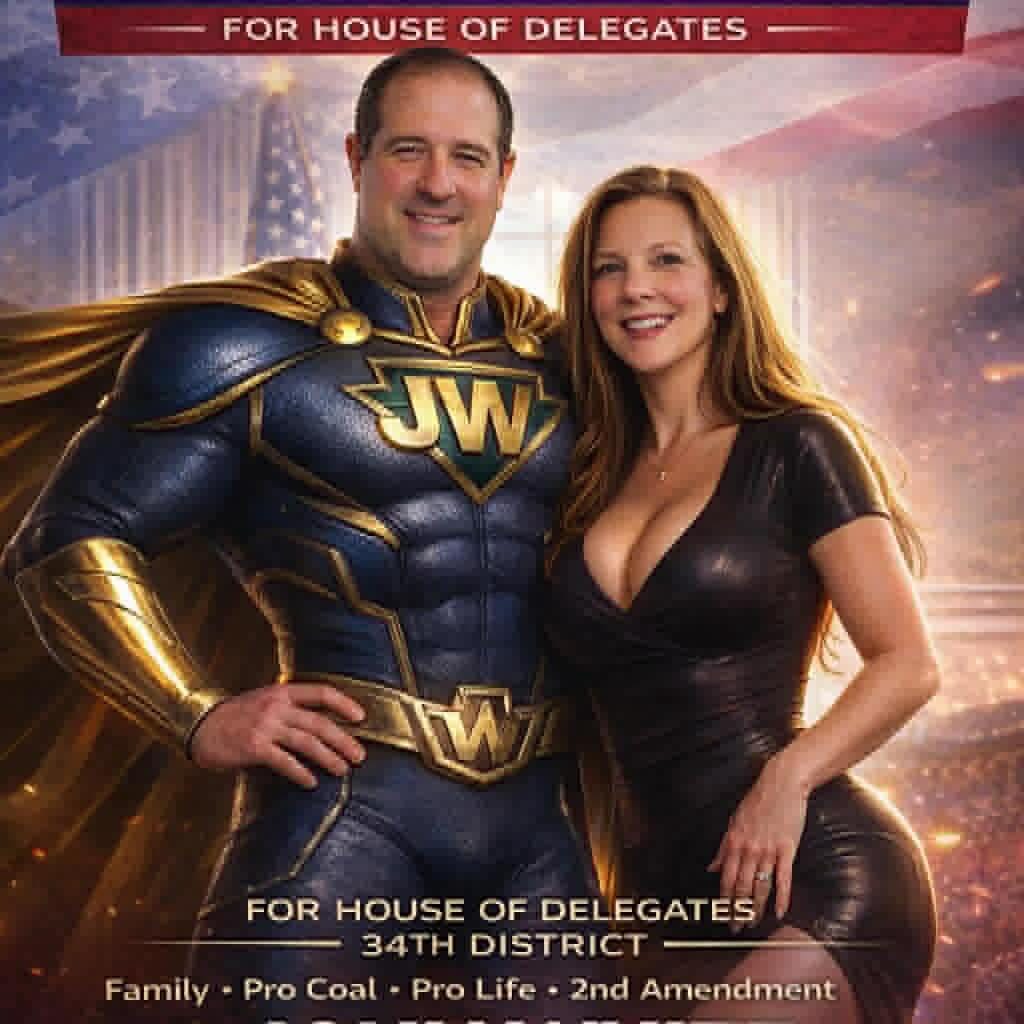
Anyway, Harless is running on a platform of “making Mingo great again,” mostly focusing on expanding protections for coal miners, which earned him the endorsement of the United Mine Workers of America. Marcum leads the four in fundraising (thanks to self-funding), with Goff in second, Harless in third, and White not raising any money (did the AI ads give that away). I think Goff wins thanks to his recognition from the school board and grassroots support, but I could see Harless winning thanks to his coal miner support.
HD-35 (Wyoming County, Trump+73) (R-Held) (GOP PRIMARY):
With Republican incumbent Adam Vance retiring in order to run for State Senate, two Republicans are running to replace him in this deeply Republican district: former Wyoming County Prosecuting Attorney Gregory Bishop and coal miner John Morgan. Bishop is running as a generic Republican, wanting to cut taxes, improve economic development, and work for the common good of the district. He’s backed by the West Virginia Chamber of Commerce and Education West Virginia. Morgan wants to improve rights for coal miners, but he hasn’t run much of a campaign otherwise. He also hasn’t raised any money, so Bishop should win this one easily.
HD-36 (McDowell County, Trump+60) (R-Held) (GOP PRIMARY):
Republican incumbent David Green is facing a primary challenge from police officer SP “Pat” McKinney in this deeply Republican district. Green is a conservative, touting his efforts to tackle the opioid crisis, stand against the “war on coal,” and stand up against “woke ideas.” McKinney has attacked Green for voting to reduce the number of troopers in the State Police, but he hasn’t really raised any money or attracted any endorsements, so Green should be fine here.
HD-39 (Eastern Mercer County, Trump+65) (R-Held) (DEM/GOP PRIMARIES):
Republican incumbent Doug Smith is retiring from this deeply Republican district, leading to two Republicans to run to replace him: Princeton Economic Development Authority Director Samuel Lusk and ghost candidate Thurman “Scott” Dickerson. Lusk is a moderate, promising to cut red tape for businesses, improve local infrastructure, and expand access to healthcare. He’s backed by outgoing Delegate Smith. Dickerson has no campaign presence anywhere, so Lusk should win this one easily.
On the Democratic side, two candidates are running: 2024 nominee Neal Vestal and progressive activist Brianna Pearcy. Vestal is focused on lowering costs and supports suspending the gas tax. Pearcy calls herself a progressive, but she also supports the 2nd Amendment, so she’s a rural progressive. Total crapshoot here, but I’m going to go with Vestal to get the win thanks to his name recognition from 2024.
HD-40 (Monroe/eastern Summers Counties, Trump+57) (R-Held) (GOP PRIMARY):
Republican incumbent Roy Cooper (not that Roy Cooper) is facing two opponents in the Republican primary here: teacher Travis Waldron and businessman Jon Fain. Cooper doesn’t have much of a campaign presence online, but he’s been a solid conservative vote in the legislature. Waldron calls himself an “independent voice,” mostly focusing on attacking Cooper for being a career politician. Fain doesn’t have a campaign presence online. Cooper should be fine here, given that Waldron and Fain haven’t raised much, if any, money and haven’t attracted any major outside help.
HD-41 (Northern Summers/Mercer/eastern Raleigh Counties, Trump+65) (R-Held) (GOP PRIMARY):
Republican incumbent Jordan Maynor is facing a primary challenge from conservative activist Adrian Carag in this deeply Republican district. Maynor is mostly running on his conservative voting record on guns, taxes, and economic development. Carag doesn’t have much of a campaign platform, mostly just asking voters if they’re better off than they were when Maynor was first elected. Maynor should win this one easily.
HD-42 (Southern Raleigh County, Trump+67) (R-Held) (GOP PRIMARY):
Appointed Republican incumbent John Jordan is facing off against US Army veteran Rick Jones in the Republican primary for this deeply Republican district.
Jordan, who was appointed to this seat in January, is a conservative. He’s focused on protecting “religious freedom,” cutting taxes, and supporting the 2nd Amendment. He’s backed the Koch-aligned Americans For Prosperity group, the West Virginia Farm Bureau, and the West Virginia Coal Association. Jones is also a conservative, promising to support law enforcement, protect the 2nd Amendment, and “protect women’ s sports.” He’s backed by a bunch of local unions, most notably the AFL-CIO and the United Mine Workers of America. Jones leads Jordan in fundraising, but Jordan has a lot more cash on hand thanks to not really spending any money. In the end, I think Jordan wins out thanks to his institutional support trumping Jones’s union support.
HD-44 (Beckley, Trump+18) (R-Held) (DEM PRIMARY):
Two Democrats are running for the party nod in this solidly Republican district: businessman Tristin Kinningham and progressive activist Christina Baisden. Kinningham is running as a standard rural Democrat, promising to protect the 1st & 2nd Amendments, expand access to affordable healthcare, and increase funding for public schools. Baisden is running as a liberal, wanting to raise the minimum wage, expand funding for public education, and improve government transparency. Kinningham has a slight financial advantage over Baisden and that makes me think he’ll win this one.
HD-46 (Eastern Pocahontas/southern Greenbrier Counties, Trump+39.5) (R-Held) (GOP PRIMARY):
Republican incumbent Jeff Campbell is facing a primary challenge from conservative activist Mark Robinson in this deeply Republican district. Campbell doesn’t have much of a campaign presence online, but he’s been a solid conservative vote in the legislature. Robinson, not to be confused with a more famous Mark Robinson, doesn’t have a campaign presence online, but he does have several news stories online about his 2024 run for Greenbrier County Sheriff. In that race, he was arrested for “stalking with intent to cause fear, assault, or injury.” Believe it or not, that wasn’t the first time he ran for County Sheriff and was incarcerated while doing so. Campbell should win this one easily.
HD-47 (Western Greenbrier County, Trump+45) (R-Held) (DEM/GOP PRIMARIES):
Republican incumbent Ray Canterbury is facing a challenge from attorney Mary Catherine Tuckwiller in the Republican primary for this deeply Republican district. Canterbury doesn’t have much of a campaign presence online, but he’s been a bit of a moderate in the legislature (voting against a few conservative-backed measures). He’s backed by several local unions. Tuckwiller is running as a conservative, promising to expand “parental choice” in education, stand up for local farmers, and oppose abortion. She’s backed by Governor Morrissey. She also has a slight financial advantage over Canterbury. I think Canterbury’s incumbency wins him this one, but Morrissey’s endorsement could get Tuckwiller the win here.
On the Democratic side, two candidates are running: US Army veteran Mark Phipps and community activist Sarah Morris. Phipps is running as a liberal, wanting to raise the minimum wage, establish a universal Pre-K program, and restore reproductive freedom. Morris is running as a standard Democrat, wanting to expand access to childcare, expand workforce development programs, and protect rural hospitals. Pure toss-up here (given that it’s a Democratic primary in a deeply Republican district), but I’m going to go with Morris to get the win.
HD-48 (Webster County area, Trump+62) (R-Held) (GOP PRIMARY):
Appointed Republican incumbent Greg Watt is facing off against attorney Mackenzie Holdren in the Republican primary for this deeply Republican district. Watt, who was appointed to this seat in October 2025, is a conservative. He supports school choice, protecting the 2nd Amendment, and cutting taxes. He’s backed by the NRA. Holdren is running as a moderate, wanting to improve child welfare, expand workforce development programs, and increase wages. She’s backed by the West Virginia Chamber of Commerce. Watt is probably more in tune with this district and Holdren hasn’t raised much money, so Watt should be the favorite here.
HD-49 (Nicholas County, Trump+62) (R-Held) (GOP PRIMARY):
Republican incumbent Stanley Adkins is facing a challenge from US Army veteran Newt McCutcheon in the Republican primary for this deeply Republican district. Adkins is mostly running on his voting record, touting his votes to improve local infrastructure, cut taxes, and increase funding for EMS services. McCutcheon is running as a conservative, touting his pro-life views, his support for the 2nd Amendment, and support for “Constitutional values.” He’s backed by the West Virginia Coal Association. I think Adkins still wins this one, as McCutcheon hasn’t really attracted much attention outside of the WVCA endorsement.
HD-51 (Eastern Fayette County, Trump+45) (R-Held) (GOP PRIMARY):
Republican incumbent Marshall Clay is facing two opponents in his bid for re-election in this deeply Republican district: businessman Dan Hill and businessman Cy Persinger. Clay doesn’t have much of a campaign presence online, but he’s been a standard, maybe a bit moderate, Republican vote in the legislature. Hill calls himself a conservative Republican who supports the 2nd Amendment and promises to look out for first responders. Persinger is running as a moderate, claiming to be the “local option” for the district. He wants to improve government transparency, strengthen rural healthcare, and invest in workforce development programs. Clay should be fine here, given the split opposition and the fact that he already beat Hill in 2024 by a 52-48 margin.
HD-52 (Southern Kanawha County, Trump+25) (R-Held) (DEM PRIMARY):
Three Democrats are running for the right to take on Republican incumbent Tresa Howell in this deeply Republican district: community activist Joyce Brown and ghost candidates Michelle Harper and Seth Adkins. Brown wants to expand access to affordable healthcare and expand economic development in the district. Her two opponents? Complete ghosts. Can’t find anything about them. I guess I have to give the nod to Brown then!
HD-53 (Eastern Kanawha County, Trump+27) (R-Held) (DEM/GOP PRIMARIES):
Republican incumbent Tristan Leavitt is facing a primary challenge from conservative activist Terry Joe Burns in this deeply Republican district. Leavitt is a conservative, touting his efforts to cut taxes, supporting “pro-faith” values, and wanting to expand access to mental healthcare. He’s backed by the West Virginia Chamber of Commerce and the West Virginia Coal Association. Burns is also running as a conservative, touting his support for Trump’s immigration policies, promising to defend the 2nd Amendment, and promising to “protect girls’ sports.” He’s lagged far behind Leavitt on the financial side of things though, so Leavitt should win this one.
On the Democratic side, two candidates are running: businesswoman Keena Mullins and teacher Howard Mize. Mullins doesn’t have any campaign presence online, while Mize’s online presence amounts to sharing pro-Democrat posts. Pure toss-up here, but I’ll go with Mize to win solely because he actually seems to be running a campaign.
HD-55 (Southern Charleston area, Trump+12) (R-Held) (DEM PRIMARY):
Two Democrats are running in this Republican-leaning seat: doctor Anthony Dasaro and civil engineer Aaron Crank. Dasaro calls himself a “Democrat with an independent streak,” promising to improve West Virginia’s public health standards, focus on “fiscal transparency,” and fight for local control over data center development. He’s backed by the AFL-CIO. Crank is running to his left, wanting to expand funding for public education, establish a universal healthcare program for West Virginia, and fight for equal rights. He’s backed by Planned Parenthood. Dasaro has a wide financial advantage over Crank and should be the favorite to win here.
HD-58 (St. Albans area, Trump+15) (R-Held) (DEM PRIMARY):
Two Democrats are running in this solidly Republican seat: businesswoman Alaina Schwechler and businesswoman Marisa Jackson. Schwechler is a liberal, touting her pro-choice views, her support for public education, and support for the LGBTQ+ community. Jackson is running as a standard Democrat, wanting to expand access to childcare, expand funding for public education, and protect people with disabilities. She has a solid financial advantage over Schwechler, so I think Jackson’s the favorite here.
HD-61 (Northeastern Kanawha County, Trump+53) (R-Held) (DEM/GOP PRIMARIES):
Republican incumbent Dean Jeffries is facing off against conservative activist Lewis Taylor in the Republican primary for this deeply Republican district. Jeffries is mostly running on his conservative voting record, touting his votes to cut income taxes and eliminate the income tax on social security. Taylor calls himself a “Christian Conservative,” running as an outsider and touting his opposition to data centers. He’s only raised $12 for his campaign though, so Jeffries should win this one easily.
On the Democratic side, two candidates are running: teacher Shane Woodrum and US Army veteran Sue Crawford. Woodrum wants to expand services for veterans, expand funding for public education, and improve access to healthcare. He’s backed by Education West Virginia and the United Mine Workers of America. Crawford doesn’t have much of a campaign platform outside of decrying the legislature for not focusing on actually important issues. I think Woodrum wins this one thanks to his union support.
HD-63 (Braxton/eastern Gilmer Counties, Trump+52) (R-Held) (DEM/GOP PRIMARIES):
Republican incumbent Lori Dittman is facing a challenge from teacher Wesley Self in the Republican primary for this deeply Republican district. Dittman is a conservative, promising to “protect the right to worship,” oppose abortion, and support the 2nd Amendment. Self is running as a right-winger, seemingly promising to end all taxes, cut spending, and increase “parental rights” in education. He’s only raised $9 for his campaign, so Dittman should win easily.
On the Democratic side, two candidates are running: attorney Kevin Westley Carpenter and social worker Betsy Coulter. Carpenter wants to expand access to healthcare, improve government transparency, and invest in local infrastructure. Coulter opposes data centers, supports expanding funding for healthcare, and wants to reform West Virginia’s foster care system. Pure toss-up here, but I’m going to go with Carpenter to win.
HD-68 (Barbour County, Trump+62) (R-Held) (GOP PRIMARY):
Republican incumbent Chris Phillips is facing two challengers in the Republican primary for this deeply Republican district: conservative activist David Critchfield and community activist Tyler Williams. Phillips doesn’t have much of a campaign presence online, but he’s been a reliably conservative vote in the legislature. Critchfield is a right-winger, with one of his major campaign planks just being the phrase “Jesus is king.” Williams is running as a conservative, wanting to slash income taxes and support the “traditional family.” With neither Critchfield or Williams raising more than $30, Phillips should win this one easily.
HD-69 (Southern Harrison County, Trump+55) (R-Held) (DEM/GOP PRIMARIES):
Republican incumbent Keith Marple is facing two opponents in his bid for another term in this deeply Republican district: former State Delegate Danny Hamrick and ghost candidate Andrew Yost. Marple doesn’t have much of a campaign presence online, but he’s been a solid (if a bit moderate) Republican vote in the legislature. Hamrick is running as a self-professed conservative, touting his support for improving rural infrastructure, improving local control, and strengthening law enforcement. Yost is a complete ghost candidate, nothing about him online at all. Marple already beat Hamrick 57-43 in the primary in 2024, so I wouldn’t be shocked if we saw a similar margin this year.
On the Democratic side, two candidates are running: social worker Jocelyn Blackwell and former US Department of Homeland Security official Lou Assaro. Blackwell is running as a liberal, wanting to expand access to mental healthcare, restore reproductive rights, and improve the foster care system. Assaro calls himself a “common sense independent,” wanting to raise wages and fix local infrastructure. Pure toss-up on who wins here, but I’ll go with Blackwell.
HD-70 (Clarksburg, Trump+20.5) (R-Held) (DEM/GOP PRIMARIES):
With Republican incumbent Mickey Petito retiring, two Republicans are running to replace him in this solidly Republican district: businessman Paul Howe and geo technician Sal Bombardiere. Howe doesn’t have much of a campaign presence online, but he has run for multiple offices in the area in the past (including this one in 2022), so he’s pretty well-known. Bombardiere also doesn’t have much of a campaign presence online. He doesn’t have an upside though, as Howe has outpaced him in the financial department by a 4-to-1 margin. I think Howe wins this one.
On the Democratic side, two candidates are running: real estate agent/2024 nominee Shannon Welsh and college student Jackson Howe, who is Paul Howe’s nephew! Welsh is running as a moderate, wanting to cut red tape for small businesses, support unions, and improve government transparency. She’s backed by several local unions. Howe wants to expand economic development, increase teacher salaries, and expand access to clean drinking water. Welsh has a huge financial advantage and has name recognition from 2024, so she should win this primary easily, denying the world of an inter-family legislative matchup.
HD-71 (Eastern Harrison County, Trump+33) (R-Held) (GOP PRIMARY):
Republican incumbent Laura Kimble is facing a primary challenge from businessman Tim McNeely in this deeply Republican district. Kimble is a conservative, claiming that her guiding philosophy when it comes to voting is whether or not a bill takes away people’s “liberty.” She’s backed by several conservative grassroots groups. McNeely is a more standard Republican, touting his economic credentials serving in Governor/now-US Senator Jim Justice’s administration and touting his pro-life views. He’s backed by the West Virginia Chamber of Commerce, the Fraternal Order of Police, and several local unions. McNeely has a wide financial advantage over Kimble. I honestly think Kimble loses. She doesn’t seem to be running as hard of a campaign as McNeely has and this isn’t too deeply conservative of a district where her conservative credentials can carry her to a win.
HD-72 (Eastern Wetzel/northern Harrison Counties, Trump+58) (R-Held) (GOP PRIMARY):
Republican incumbent Clay Riley is being challenged by businesswoman Megan Krajewski in the Republican primary for this deeply Republican district.
Riley is a moderate, touting his bills to improve the local environment, improve government transparency, and support local law enforcement. He’s backed by US Senator Shelley Moore Capito, WV-02 Congressman Riley Moore, Attorney General JB McCluskey, State Treasurer Larry Pack, several unions, and a bunch of conservative-leaning business groups. Krajewski is running as a conservative, promising to strengthen school choice and heavily support family values. She’s backed by the Koch-aligned Americans For Prosperity group. Riley has a huge financial advantage over Krajewski, but the fact that he’s had to break out the big guns for this race (Capito, Moore, etc.) makes me think that he thinks he’s in trouble. I still think he wins though.
HD-73 (Taylor County, Trump+51.5) (R-Held) (GOP PRIMARY):
With Republican incumbent Bryan Smith retiring from this deeply Republican district, two Republicans are running to replace him: Deputy Taylor County Clerk Rob Gallo and businessman Frank Sturm.
Gallo is a conservative, touting his opposition to abortion and support for expanding economic development. He’s backed by outgoing Delegate Smith and the Koch-aligned Americans For Prosperity group. Sturm doesn’t have much of a campaign platform, but his support for “common-sense leadership” and support from unions probably points him in the moderate direction. Sturm has easily outclassed Gallo in the financial department, but I think Gallo’s support from Smith and AFP should get him the win here.
HD-74 (Southern Marion County, Trump+41) (R-Held) (GOP PRIMARY):
Republican incumbent Guy Ward was appointed to this deeply Republican seat in January and he’s running for a full term tonight. He’ll have to get through two opponents in order to do so: Marion County Republican Party Chairman Scott Crouch and conservative activist Jonathan Woertz. Woertz is on the ballot, but he dropped out last month and endorsed Crouch.
Ward is a conservative, focusing on expanding economic development, raising teacher pay, and opposing abortion/supporting the 2nd Amendment. He’s backed by the NRA, the West Virginia Chamber of Commerce, and several Republican-aligned special interest groups. Crouch is running as a conservative, mostly just repeating the West Virginia GOP’s platform. He’s backed by conservative State Senator Chris Rose. Ward leads Crouch in fundraising and I think he’ll hold on and win thanks to that and having more institutional support behind him.
HD-75 (Central Marion County, Trump+30) (R-Held) (DEM PRIMARY):
Two Democrats are running in this solidly Republican district: Marion County Commissioner/former State Delegate Linda Longstreth and nurse Josh Roark. Longstreth is mostly running a campaign focusing on dunking on the West Virginia Republicans for focusing on unimportant issues during their last session, but she has a lot of name recognition in the district from her numerous years in county/state government. Roark wants to expand access to healthcare, expand funding for public education, and expand access to affordable childcare. Roark hasn’t raised any money, so Longstreth’s name recognition and uncontested financial advantage should give her an easy win.
HD-78 (Eastern Monongalia County, Trump+17.5) (R-Held) (GOP PRIMARY):
Republican incumbent Geno Chiarelli is facing a challenge from businessman Cohen Terneus in the Republican primary for this solidly Republican district. Chiarelli is calling himself a “proven conservative,” touting his efforts to cut taxes and improve local infrastructure. He’s backed by State Senator Mike Oliverio and fellow State Delegate Dave McCormick. Corneus is also a conservative, wanting to improve local infrastructure, fight the opioid epidemic, and “protect girls’ sports.” He hasn’t raised much money or attracted much support, so Chiarelli should win this one.
HD-80 (Western Morgantown, Harris+10.5) (D-Held) (DEM PRIMARY):
With Democratic incumbent John Williams retiring in order to run for State Senate, two Democrats are running to replace him: nonprofit director Olivia Miller and social worker Kirsten Nelson.
Miller is a liberal, promising to defend women’s rights, lower energy costs, and increase funding for public education. She’s backed by outgoing Delegate Williams, the Sierra Club, and a bunch of local unions (most notably the AFL-CIO and Education West Virginia). Nelson is running on a vague platform of “leading with compassion,” supporting “inclusion,” and championing “integrity.” She also has an AI-slop generated map of the district:
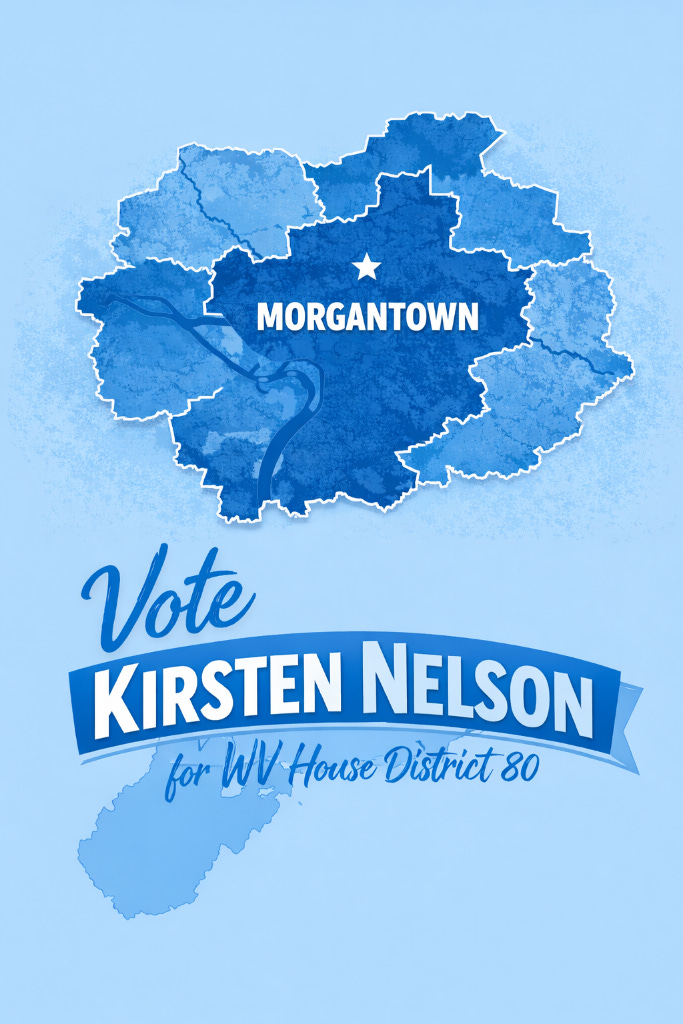
Because graphic design is her passion. Anyway, Miller has a wide financial advantage over Nelson and should win here thanks to that and her better institutional support.
HD-82 (Northern Monongalia County, Trump+6) (R-Held) (DEM PRIMARY):
Two Democrats are running in what’s probably the West Virginia Democrats’ best pickup opportunity in the State House this year: attorney Eddie Wagoner and mental health professional Thomas Ramsey.
Wagoner is a standard Democrat, wanting to improve local infrastructure, expand funding for public education, and support “justice for all.” He’s backed by several local unions, most notably the AFL-CIO and Education West Virginia. Ramsey is running on a vague platform of improving public education, improving healthcare, and protecting the rights of West Virginians. Wagoner has easily outpaced Ramsey in the financial department, with Ramsey not even raising $200. Wagoner should win this one easily and set himself up for a high-profile November election against Republican incumbent David McCormick (not that David McCormick).
HD-85 (Grant/Tucker Counties, Trump+67) (R-Held) (DEM/GOP PRIMARIES):
With Republican incumbent John Paul Hott retiring, three Republicans are running to replace him in this deeply Republican district: Parsons Mayor Bruce Kolsun, businessman Jerry Ours, and truck driver Alex Bosley.
Kolsun is a standard Republican, touting his desire for expanding economic development, wanting to improve local infrastructure, and wanting to fight the opioid epidemic. He’s backed by the Koch-aligned Americans For Prosperity group, the anti-abortion West Virginians For Life, and Education West Virginia. Ours is a conservative, but he doesn’t really have a detailed campaign platform outside of wanting to support small businesses. He is backed by a few conservative grassroots groups though. Bosley doesn’t really have much of a platform, but he is backed by a few unions. He leads the pack in fundraising too, but Kolsun and Ours are right behind him. I think Kolsun wins this mostly thanks to his status as a local elected official and AFP support.
On the Democratic side, two candidates are running: farmer Deborah Stiles and data scientist Dean Bonney. Stiles, who was also the 2024 Democratic nominee for State Agriculture Commissioner, is running as a moderate. She wants to restore “integrity” in politics, lower costs, and protect farmers. Bonney is running on an anti-data center platform, alongside wanting to expand funding for social services and establishing a universal basic income of $1500/month. Stiles should win this one based on her name recognition from 2024.
HD-87 (Northern Mineral County, Trump+57) (R-Held) (GOP PRIMARY):
Republican incumbent Gary Howell is trying to fend off a primary challenge from Mineral County Commissioner Charles “Dutch” Staggs in this deeply Republican district.
Howell is running on his conservative voting record, touting his votes to cut taxes, eliminate state taxes on social security, and protect the 2nd Amendment. He’s also trying really hard to tie himself to President Trump, maybe in a sign that he’s a bit worried about this race. He’s backed by several Republican/conservative-leaning special interest groups. Staggs is mostly running on his record as County Commissioner, mostly focusing on improving law enforcement, but also talking about improving schools/parks. Howell has easily outpaced him in the financial department, which makes me think that he’s going to win here.
HD-89 (Eastern Hampshire/western Morgan Counties, Trump+59) (R-Held) (DEM PRIMARY):
Two Democrats are running in this deeply Republican district: community activist John Zupan and attorney JR Hepworth. Zupan wants to let local officials make decisions about data centers instead of the state and expand funding for public education/childcare. Hepworth wants to expand funding for special education programs, increase teacher pay, and expand workforce development programs. Pure toss-up here given that it’s a deeply Republican district, but I’m going to go with Zupan to win.
HD-90 (Eastern Morgan/western Berkeley Counties, Trump+54.5) (R-Held) (GOP PRIMARY):
Republican incumbent George Miller is facing three opponents in his attempt to win another term in this deeply Republican district: pastor Dan Caldwell, US Army veteran Davy Jones, and doctor Kevin McLaughlin. Miller doesn’t have much of a campaign platform online, but he does have several endorsements from both conservative grassroots groups and unions. Caldwell calls himself a “Christian conservative,” who wants to ban gay marriage and defend the 2nd Amendment. Jones is a conservative, promising to defend the 2nd Amendment, oppose abortion, and shrink the size of the government. McLaughlin doesn’t have much of a campaign presence online. Miller leads the four in fundraising, with Jones and McLaughlin behind him and Caldwell far behind the three. I think Miller should be fine here considering the opposition is split three ways and no one has really consolidated between any of them.
HD-99 (Central Jefferson County, Trump+14) (R-Held) (DEM/GOP PRIMARIES):
Republican incumbent Wayne Clark is facing a primary challenge from US Air Force veteran Robert Fluharty in this Republican-leaning seat. Clark is a conservative, touting his votes to expand exemptions for vaccines, cut taxes, and defend the 2nd Amendment. He’s backed by the Koch-aligned Americans For Prosperity group and several other conservative-leaning special interest groups. Fluharty is a more standard Republican, wanting to cut property taxes, improve local infrastructure, and hold utility companies accountable. Clark has easily outpaced him in the financial department and Fluharty really hasn’t attracted much attention, so Clark should win this one.
On the Democratic side, there are also two candidates running: community activist Regina Dyer and businessman Robert Vincent. Dyer wants to “empower” local farmers and small businesses, expand access to childcare, and expand access to affordable housing. Vincent wants to bring more jobs to the district, expand funding for public education, and expand access to affordable healthcare. Neither candidate has raised much money, so this one’s up in the air. I’m going to go with Dyer here, just a gut feeling.
And that’s it for this edition of Uncrewed’s State Legislative Election Watch. I’ll be back next week for six(!) more editions of the State Legislative Election Watch covering primaries in Alabama, Georgia, Idaho, Kentucky, Oregon, & Pennsylvania. Until then, I’ve been Uncrewed/Chris (you can follow me on Twitter @Uncrewed, same on Bluesky!) and don’t forget to stay awesome!
God, that singular Harris district at the end hit like crack after all those Trump+infinity districts. What a horrible state.
I’ll be praying for you this week, man. Lots of primaries to pump out SLEWs for but I know you got this shit, and I’ll be here to eat it up